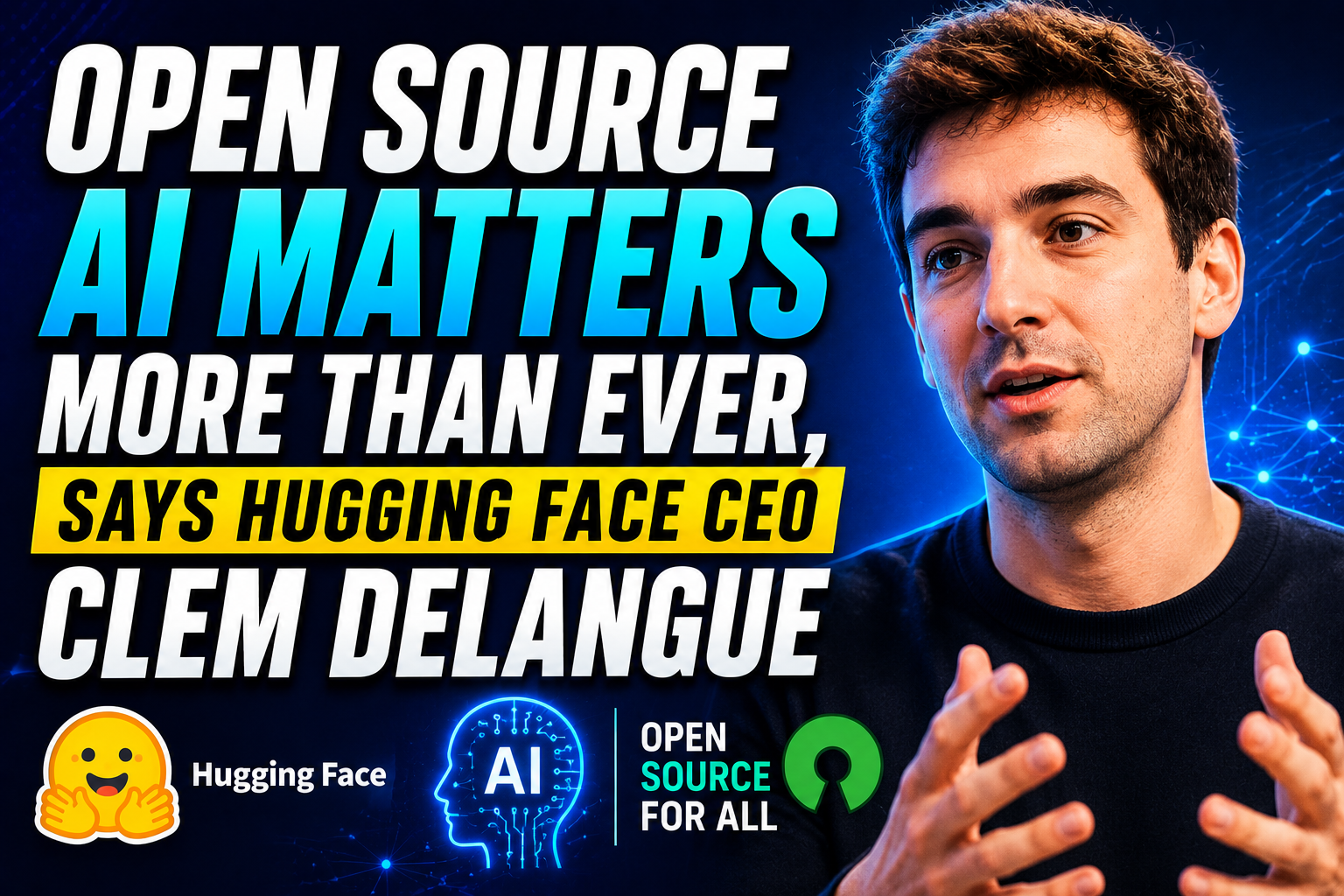

Open-source AI is entering a new era, and according to Hugging Face CEO Clem Delangue, it has never been more important than it is today. As AI development becomes increasingly concentrated among a handful of large technology companies, Delangue argues that open models are becoming essential for innovation, competition, and accessibility.
Companies Are Moving Away From Expensive AI APIs
According to Delangue, many companies begin their AI journey using commercial AI APIs from major providers. However, as usage grows, costs rise quickly.
As a result, businesses are increasingly switching to open-source models that they can run, customize, and optimize themselves. This gives organizations greater control over pricing, privacy, and performance.
Hugging Face Has Become the GitHub of AI
Over the past few years, Hugging Face has evolved into one of the world’s largest hubs for AI models, datasets, and machine learning tools.
The platform now hosts millions of models and datasets and is used by developers, startups, researchers, and large enterprises around the world. Hugging Face says roughly half of Fortune 500 companies now use its ecosystem in some capacity.
Open Models Reduce Dependence on Big Tech
Delangue believes open-source AI prevents too much power from concentrating in a small number of companies.
If only a few organizations control the world’s most powerful AI systems, startups and researchers may struggle to compete. Open models allow developers to experiment, innovate, and build products without relying entirely on expensive proprietary services.
China’s Open-Source AI Boom Is Changing the Market
The debate around open AI has become even more important as Chinese companies release increasingly competitive open models.
Several Chinese open-source models now rank among the best-performing systems for coding and AI agent tasks. Many Western startups and researchers already rely on these models because of their strong performance and lower operating costs.
Delangue warns that restrictions on open AI development could concentrate even more power in the hands of a few technology giants and limit competition across the industry.
Open AI Versus Closed AI
The AI industry is becoming divided between two approaches:
- Closed AI models, controlled by a small number of companies through APIs.
- Open-source AI models, which developers can inspect, modify, and deploy themselves.
Supporters of open AI argue that openness accelerates innovation and democratizes access to technology. Critics worry that powerful open models could be misused if they become widely available.
The Future of AI May Depend on Openness
Despite ongoing debates about safety and regulation, Delangue remains optimistic about the future of open AI.
He believes the next generation of AI innovation will come from developers, startups, researchers, and communities building on shared technology rather than relying solely on a few large companies.
As the AI race accelerates, the battle between open and closed models could become one of the defining technology debates of the decade.

 By
By