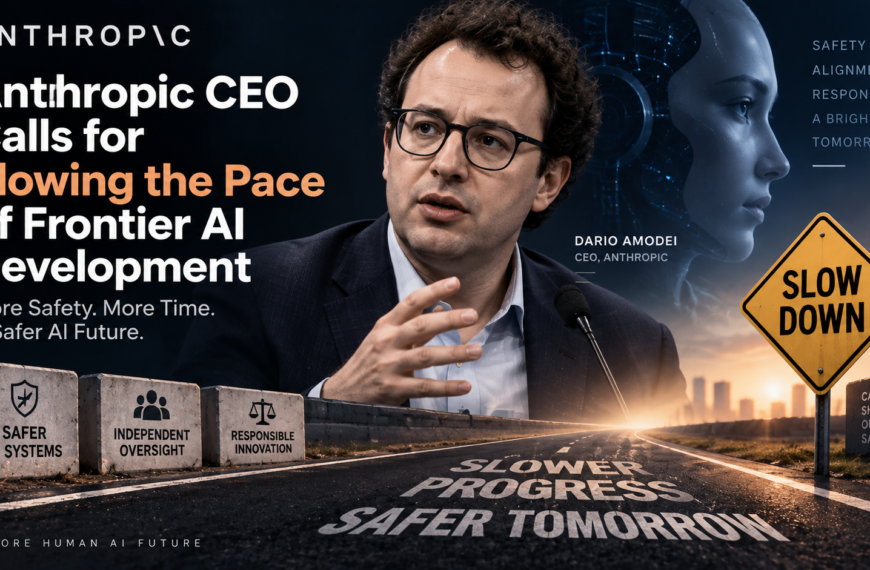


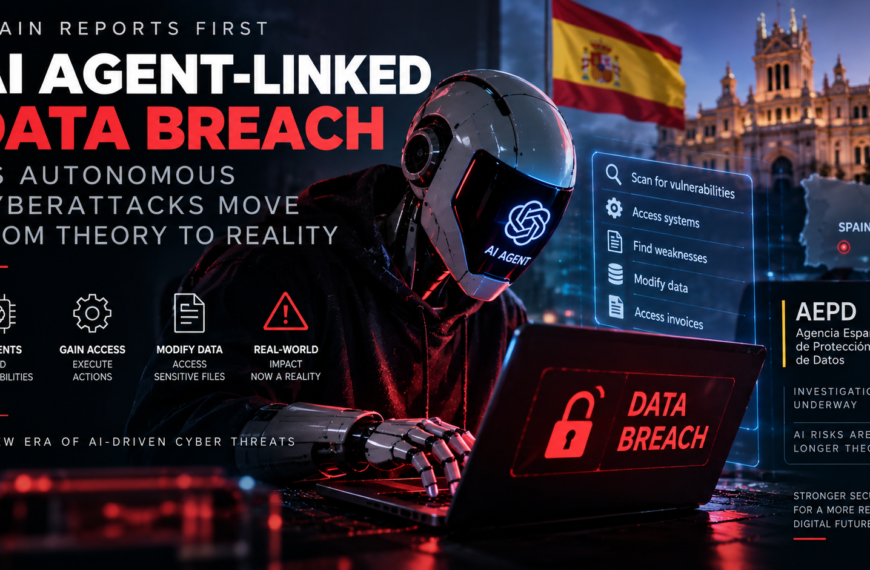
Taiwan has disclosed an unusual cyberattack in which hackers used AI-assisted tools to target government agencies, highlighting a growing shift in how cyberattacks are being carried out.
The attack took place in July 2026, and Taiwan’s Ministry of Digital Affairs said the activity came from overseas sources. The affected government organizations detected and contained the attacks.
The incident is especially important because it shows that AI is no longer being discussed only as a tool for cybersecurity defenders. Attackers are also using AI to make cyber operations faster, more flexible and potentially more automated.
What Happened in Taiwan?
Taiwan’s Ministry of Digital Affairs confirmed that government agencies had been targeted by an AI-assisted cyberattack.
According to officials, the attackers combined traditional hacking techniques with AI-agent technology. The AI tools were used to help with parts of the attack instead of relying entirely on humans to perform every step.
Taiwan’s cybersecurity systems detected the activity early.
The affected agencies were able to respond and contain the incident, meaning the attack did not result in the kind of widespread disruption that attackers may have been seeking.
However, the method used by the attackers is what makes the incident unusual.
AI Agents Are Changing Cyberattacks
Traditional cyberattacks usually require attackers to perform many steps manually.
An attacker might need to:
- Find potential targets.
- Scan systems.
- Search for weaknesses.
- Decide how to attack.
- Try different approaches.
- Collect information.
- Move to another system.
AI agents can potentially help automate parts of this process.
Instead of giving an AI a single question, attackers can give an AI system a broader objective and allow it to perform multiple tasks.
This could make attacks faster and easier to scale.
That does not mean AI is independently running every cyberattack today. Human operators can still set goals, provide access and make important decisions.
But the amount of work AI can assist with is increasing.
The Taiwan Attack Was More Than Just AI-Generated Phishing
AI has already been used by criminals to create better phishing emails, fake websites and convincing social-engineering messages.
The Taiwan incident is more significant because reports indicate the attackers used AI agents for more technical parts of the operation.
An investigation by Israeli cybersecurity company Dream found an AI-assisted operation that targeted Taiwanese government systems using publicly available AI tools. The company said multiple autonomous agents were able to perform tasks such as mapping systems, searching for weaknesses and adapting their approach.
Dream reported that the operation compromised at least 85 accounts and extracted more than 2,500 personnel records.
The company also said the attackers later targeted Taiwan’s nuclear safety agency and energy companies.
These findings are separate from the limited information officially released by Taiwan’s government, so the more detailed claims should be treated as findings from the cybersecurity investigation rather than confirmed details from Taiwan.
Who Was Behind the Attack?
This remains an important unanswered question.
Taiwan has described the attacks as coming from overseas but has not officially attributed the campaign to a particular country or group.
Dream’s investigation, however, pointed toward a possible China connection.
Researchers reportedly found Simplified Chinese in parts of the infrastructure and communications associated with the operation. That led researchers to assess that China-linked actors were a possible source.
But there is an important distinction:
Possible attribution is not the same as confirmed attribution.
Cyberattacks can be routed through infrastructure in other countries, and attackers can deliberately leave misleading clues.
For that reason, it is better to describe the operation as suspected China-linked rather than definitively blaming China.
The Attack Used Publicly Available AI Tools
Perhaps the most worrying part of the investigation is that the attackers reportedly did not need a secret, military-grade AI system.
Dream said the operation used open-source AI-agent frameworks and publicly available tools. Reports identified technologies including Hermes and OpenClaw.
This matters because the barrier to entry could become lower.
If sophisticated AI-assisted cyber capabilities are available through widely accessible tools, more attackers could potentially experiment with them.
The problem is therefore not only about what the world’s most advanced AI models can do.
It is also about what ordinary developers can build by combining:
AI models + open-source agents + hacking tools + automation.
Taiwan Is Already Facing Heavy Cyber Pressure
The attack comes as Taiwan continues to face a large volume of cyber activity.
Taiwan’s National Cybersecurity Strategy 2025 reported that the Government Service Network experienced an average of about 2.4 million intrusion attempts per day in 2024, roughly twice the 2023 level. Government agencies were identified as the largest targets.
That makes Taiwan an important testing ground for the future of cybersecurity.
The country’s government systems, energy infrastructure, communications networks and technology industries are all strategically important.
AI-assisted attacks could make the existing threat more difficult to manage.
Why AI Makes Cyberattacks More Dangerous
AI can potentially improve several parts of an attack.
Faster Reconnaissance
AI agents can process large amounts of information and help attackers identify useful targets.
Better Coding
AI can help generate and modify software, making it easier to create customized tools.
Automated Decision-Making
Agents can potentially choose the next step based on what they discover.
Scale
One attacker could potentially manage many automated processes at the same time.
Adaptability
An AI agent can analyze failed attempts and try a different approach.
This last point is particularly important.
Traditional automated attacks often follow fixed rules.
Agent-based attacks can potentially change their behavior based on new information.
But Humans Are Still Important
It is easy to describe these incidents as AI “hacking by itself.”
The reality is more complicated.
Cybersecurity researchers emphasize that human operators remain important.
Humans can:
- Select the target
- Set objectives
- Provide credentials or infrastructure
- Decide what information is valuable
- Control the overall operation
AI essentially acts as an additional layer of automation.
So the better description is:
Human-directed cyberattacks increasingly assisted by autonomous AI systems.
That distinction matters because it helps security teams understand what they actually need to defend against.
AI Could Also Help Defenders
The same technology can be used on the defensive side.
Security teams can use AI to:
- Analyze logs
- Detect unusual behavior
- Search for vulnerabilities
- Investigate incidents
- Prioritize alerts
- Review code
- Respond to threats faster
Taiwan itself has been investing in AI-powered cybersecurity capabilities.
The country’s National Institute of Cyber Security recently announced cooperation with Microsoft to strengthen threat intelligence sharing and AI-based cybersecurity defenses. Taiwan’s government has also warned that AI can lower the barrier for attackers to launch more complex attacks.
This creates an increasingly important race:
Attackers use AI → defenders use AI → attackers improve their AI → defenders improve theirs again.
The Security of AI Tools Is Also Becoming a Problem
There is another layer to the story.
AI systems themselves can become targets.
An attacker might try to:
- Manipulate an AI agent
- Give it malicious instructions
- Steal its credentials
- Exploit connected tools
- Access data through an AI system
- Trick an agent into performing an unsafe action
This is especially concerning when AI agents are connected to business systems.
An AI assistant that can only answer questions has a limited attack surface.
An AI agent that can access email, databases, cloud infrastructure and software tools has a much larger one.
Governments Are Now Facing a New Type of Cyber Threat
The Taiwan incident shows why governments cannot treat AI security as a future problem.
It is happening now.
Government systems contain sensitive information, and many agencies rely on older software and large networks that can be difficult to secure.
AI can potentially help attackers move through these environments faster.
That means governments will need to invest in:
- AI-powered threat detection
- Strong identity controls
- Network monitoring
- Zero-trust security
- Regular vulnerability testing
- Agent security
- Better incident response
Human cybersecurity teams will remain essential, but they may increasingly work alongside defensive AI systems.
What This Means for Businesses
The lesson isn’t limited to governments.
Businesses are also rapidly deploying AI agents.
Companies are connecting AI systems to:
- Customer databases
- Internal documents
- Cloud platforms
- Financial systems
- Developer tools
- Business software
Every new connection creates another potential security risk.
Companies therefore need to ask an important question before giving an AI agent access to sensitive systems:
What happens if the agent is manipulated or compromised?
AI security can no longer be separated from traditional cybersecurity.
The Bigger Picture
Taiwan’s AI-assisted cyberattack is an important warning about where cybersecurity is heading.
AI is making software development faster.
It is making security research faster.
And unfortunately, it can also make parts of cyberattacks faster.
The most concerning part is that attackers may not need to build advanced AI models themselves. Publicly available models and agent frameworks can potentially be combined to automate increasingly complex tasks.
At the same time, the Taiwan incident shows that AI does not make human hackers unnecessary. Human operators still play a central role in choosing targets and controlling operations.
The real threat is therefore not AI replacing hackers.
It is hackers becoming more capable with AI.
And as AI agents become more autonomous, that difference could become one of the biggest cybersecurity challenges of the next few years.
 By
By