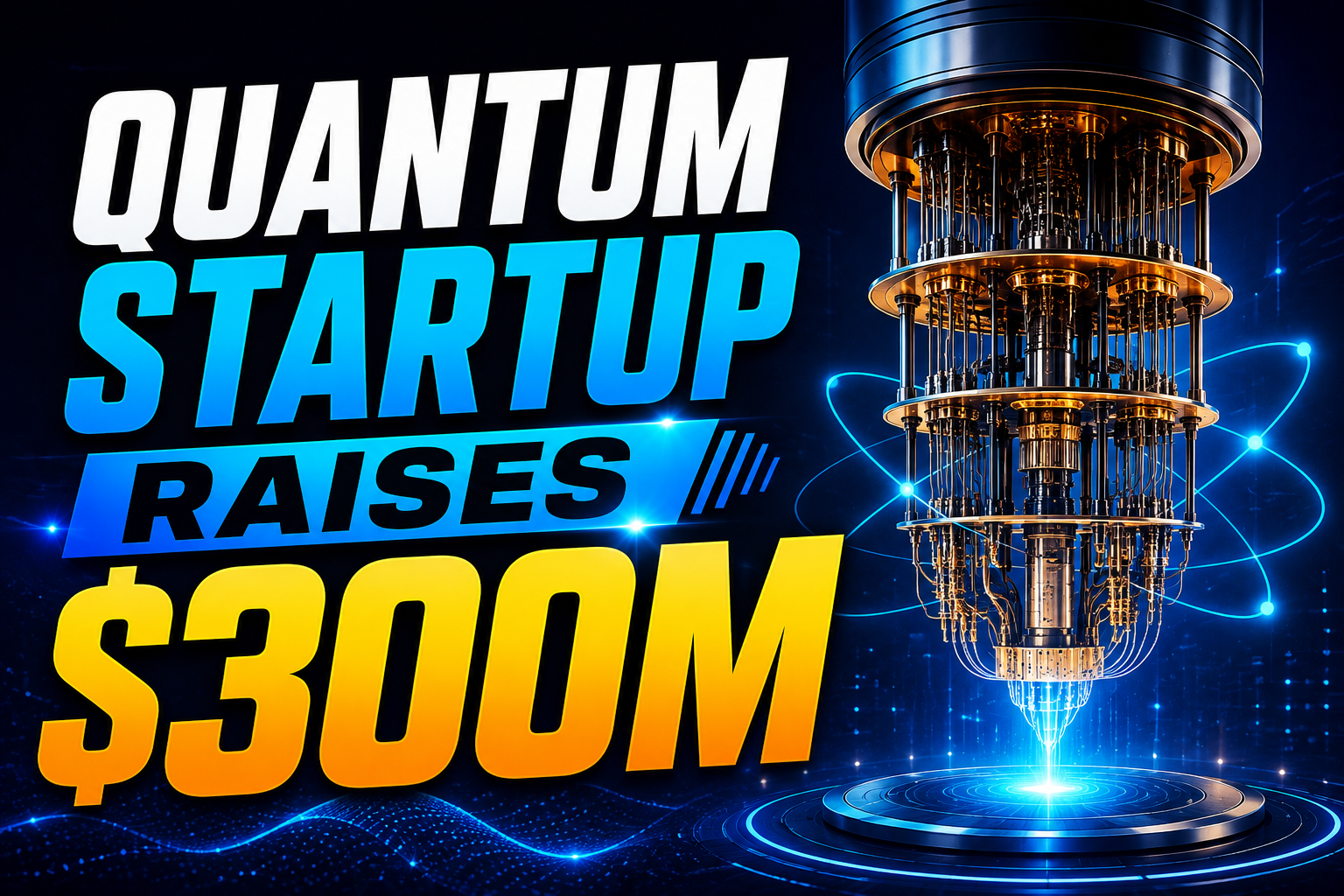

Quantum startup Oratomic has emerged from stealth with a massive $300 million funding round and an ambitious goal: building a commercially useful quantum computer with only 10,000 to 20,000 qubits by 2030. The announcement has quickly become one of the biggest stories in the quantum computing industry this year.
A Different Approach to Quantum Computing
Most experts believe practical quantum computers may require hundreds of thousands or even millions of qubits to solve real-world problems.
Oratomic believes it can achieve the same result with only a fraction of that number.
The company uses a neutral-atom architecture combined with new error-correction techniques that dramatically reduce the number of qubits required for useful computation.
According to the company, this approach could make fault-tolerant quantum computing achievable much sooner than previously expected.
The Startup Raised One of the Largest Quantum Funding Rounds Ever
Oratomic secured $300 million in Series A funding, making it one of the largest early-stage investments in quantum computing history.
The funding round was co-led by ARCH Venture Partners, Spark Capital, and Khosla Ventures. Reports suggest the investment values the startup at around $1.5 billion.
The company plans to use the capital to expand hardware development, manufacturing, and quantum research teams.
Founded by Leading Quantum Researchers
Oratomic was founded by Dolev Bluvstein, a researcher from Caltech, alongside experts in quantum physics, optical engineering, and error correction.
The company also benefits from guidance from some of the biggest names in quantum research, including renowned physicist John Preskill.
Why 20,000 Qubits Matters
Today’s leading quantum computers typically operate with hundreds or, in some cases, a few thousand physical qubits.
Building a fault-tolerant machine with only 10,000 to 20,000 qubits would represent a major breakthrough for the industry.
Such systems could potentially tackle problems involving:
- Drug discovery
- Materials science
- Logistics optimization
- Financial modeling
- Artificial intelligence
- Cryptography and cybersecurity
Quantum experts believe these applications could unlock trillions of dollars in economic value over the coming decades.
The Crypto Industry Is Watching Closely
One reason this announcement attracted significant attention is its potential impact on modern encryption.
Large-scale fault-tolerant quantum computers could eventually run Shor’s Algorithm, a quantum method capable of breaking many of today’s public-key cryptography systems.
That possibility has increased interest in post-quantum cryptography, which aims to protect digital systems from future quantum attacks.
A New Chapter in the Quantum Race
The race to build practical quantum computers already includes major players such as Google, IBM, Microsoft, IonQ, and Atom Computing.
Oratomic’s announcement suggests startups may still have an opportunity to disrupt the industry with new architectures and breakthrough research.
If the company succeeds, it could dramatically accelerate the arrival of practical quantum computing and reshape industries ranging from healthcare to cybersecurity.

 By
By