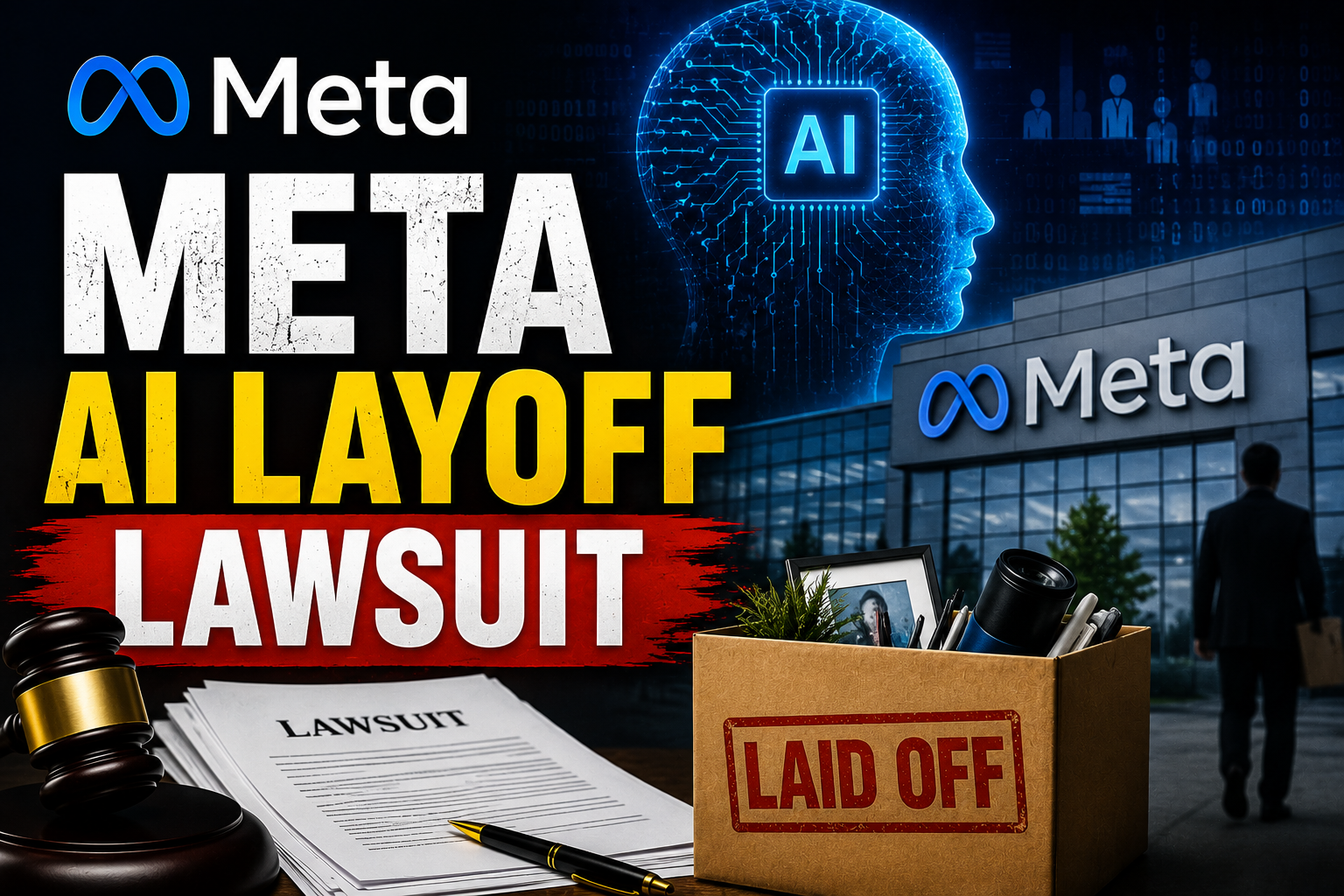

Meta is facing a new lawsuit that claims the company used artificial intelligence systems to flag employees who were on medical, parental, or family leave during recent layoffs. The case is raising fresh concerns about how companies use AI in workplace decisions and employee evaluations.
The lawsuit was filed by a group of former Meta employees who believe AI-powered performance systems unfairly affected workers who had taken legally protected leave.
Former Employees Challenge Meta’s Layoff Process
According to court filings, former employees claim Meta relied on internal AI tools, productivity metrics, and automated evaluation systems during workforce reductions.
The lawsuit argues that these systems may not have properly accounted for periods when employees were away on approved leave.
As a result, workers who took maternity leave, medical leave, disability leave, or family leave may have appeared less productive than their colleagues who remained active during the same period.
The plaintiffs claim this created an unfair disadvantage during performance reviews and layoff decisions.
Concerns Over AI-Based Employee Evaluation
Many companies now use AI tools to measure productivity, monitor workflows, and analyze employee performance.
These systems often review factors such as:
- Project contributions
- Communication activity
- Task completion rates
- Collaboration metrics
- Software usage patterns
- Internal productivity signals
However, critics argue that AI systems can produce misleading results if companies fail to adjust for approved absences or exceptional circumstances.
Employment experts warn that algorithms may unintentionally penalize workers who take legally protected leave.
Meta Responds to the Allegations
Meta has denied the claims made in the lawsuit.
The company says managers and human decision-makers made workforce decisions rather than AI systems acting independently.
Meta also stated that it follows employment laws and company policies when conducting layoffs and evaluating employee performance.
The company intends to defend itself against the claims in court.
AI in Human Resources Faces Growing Scrutiny
The lawsuit arrives as companies increasingly adopt AI tools across human resources departments.
Organizations now use AI for:
- Resume screening
- Candidate selection
- Performance analysis
- Promotion recommendations
- Workforce planning
- Employee engagement monitoring
While these tools can improve efficiency, experts continue to debate whether they can introduce hidden bias into workplace decisions.
As AI becomes more common in HR processes, regulators around the world are paying closer attention to how companies use these systems.
A Potential Landmark Case for Workplace AI
Legal experts believe the Meta case could become an important test for AI in employment decisions.
The outcome may influence future regulations around:
- AI transparency
- Automated decision-making
- Employee privacy
- Workplace discrimination protections
- Human oversight requirements
The case may also shape how organizations deploy AI systems for hiring, performance management, and layoffs in the years ahead.
The Bigger Question for Businesses
The lawsuit highlights a broader challenge facing modern companies.
Businesses want to use AI to improve efficiency and reduce costs. However, they must also ensure that automated systems remain fair, transparent, and accountable.
As organizations continue to adopt AI tools, balancing automation with human judgment will become increasingly important.
What Happens Next?
The case is still in its early stages, and the court has not ruled on the claims.
However, the lawsuit has already sparked discussion across the technology industry about the growing role of AI in workplace decisions.
Regardless of the final outcome, the case could become one of the most closely watched legal battles involving AI and employment practices.
 By
By