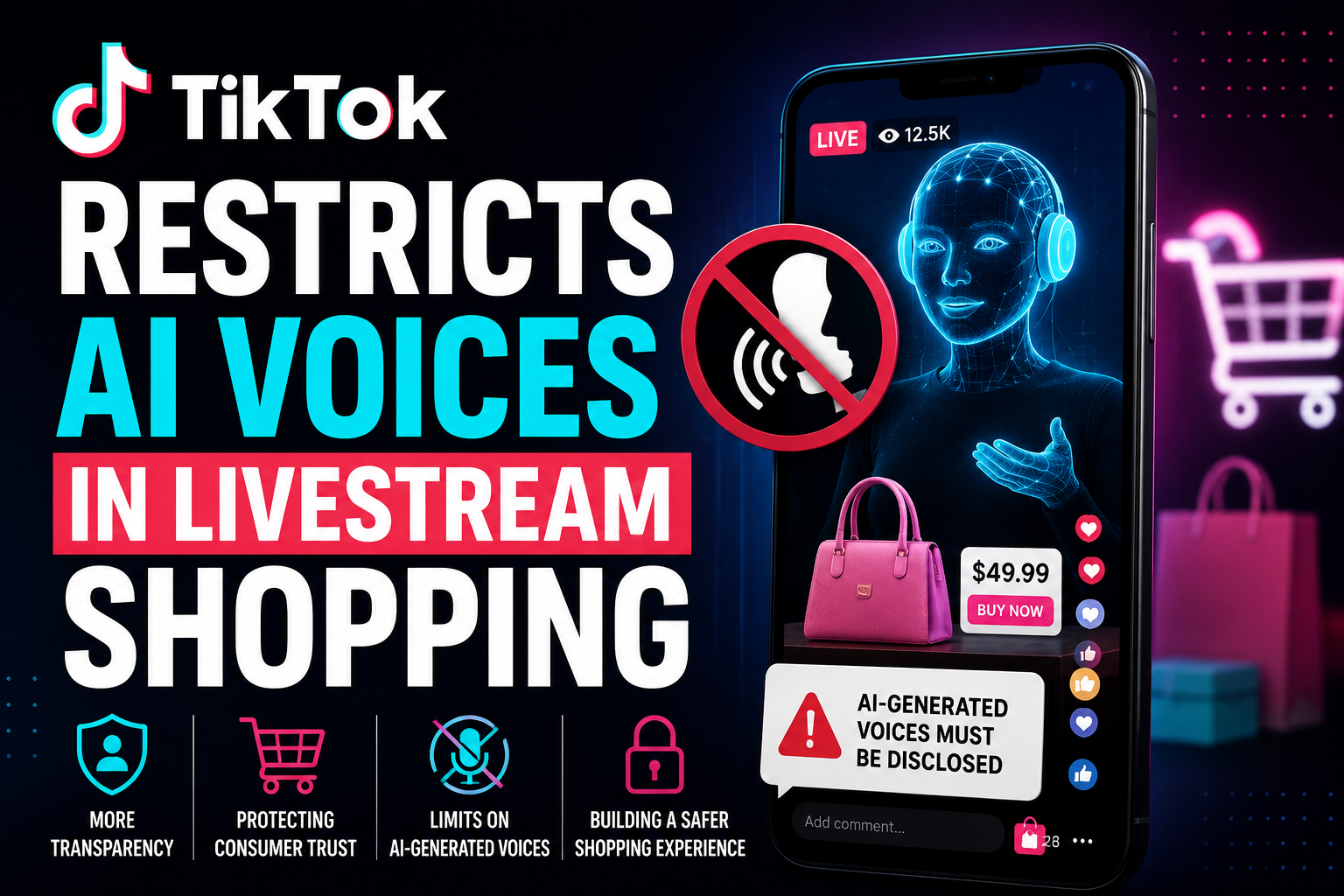

TikTok is introducing new restrictions on the use of AI-generated voices during livestream shopping sessions. The move aims to improve transparency and ensure viewers know when they are interacting with artificial voices rather than human hosts.
The decision comes as AI-generated avatars and synthetic voices become increasingly common in live commerce across Asia and other major markets.
TikTok Wants More Transparency
Livestream shopping has become one of TikTok’s fastest-growing businesses.
However, many sellers have started using AI-generated voices to present products, answer questions, and engage with viewers during live sessions.
TikTok now wants users to clearly understand when AI is being used in these broadcasts.
The platform is expected to require disclosures or limit how synthetic voices can participate in shopping streams. This could help reduce confusion and improve trust among buyers.
AI Hosts Are Growing Rapidly
AI-powered livestream hosts have become popular because they can operate around the clock without breaks.
Businesses use them to:
- Introduce products
- Answer common questions
- Promote discounts
- Support multiple languages
- Run 24-hour shopping channels
These virtual presenters can significantly reduce operating costs for merchants.
However, regulators and platforms are becoming increasingly concerned about transparency and consumer protection.
Protecting Consumer Trust
Trust plays a major role in livestream commerce.
Many shoppers prefer knowing whether recommendations come from a human creator or an AI system.
TikTok’s latest policy appears to focus on preserving that trust while still allowing innovation in AI-powered commerce.
The company believes clear labeling and disclosure requirements can help users make informed purchasing decisions.
The AI Commerce Race Continues
TikTok is not stepping away from artificial intelligence.
Instead, the company continues investing heavily in AI-powered recommendations, creator tools, advertising systems, and shopping features. TikTok Shop remains one of the company’s fastest-growing products globally.
The new rules simply suggest that TikTok wants stronger guardrails around how AI interacts with consumers during sales events.
A Wider Industry Trend
The move reflects a broader trend across the technology industry.
Governments and regulators around the world are increasingly asking companies to disclose when AI generates content, voices, or recommendations.
Similar rules are already appearing in political advertising, customer support, and digital media.
Livestream commerce may become the next major area for AI transparency requirements.
What This Means for Sellers
Merchants who rely on AI-generated presenters may need to adjust their strategies.
Some businesses could return to human hosts for premium products and customer interactions.
Others may continue using AI while clearly labeling synthetic voices during broadcasts.
Either way, transparency is quickly becoming one of the most important topics in AI-powered commerce.
The Bigger Picture
AI is changing how products are marketed and sold online.
However, platforms must balance automation with user trust.
TikTok’s latest restrictions suggest the future of AI commerce will not simply be about what technology can do.
It will also depend on how openly companies use it.

 By
By