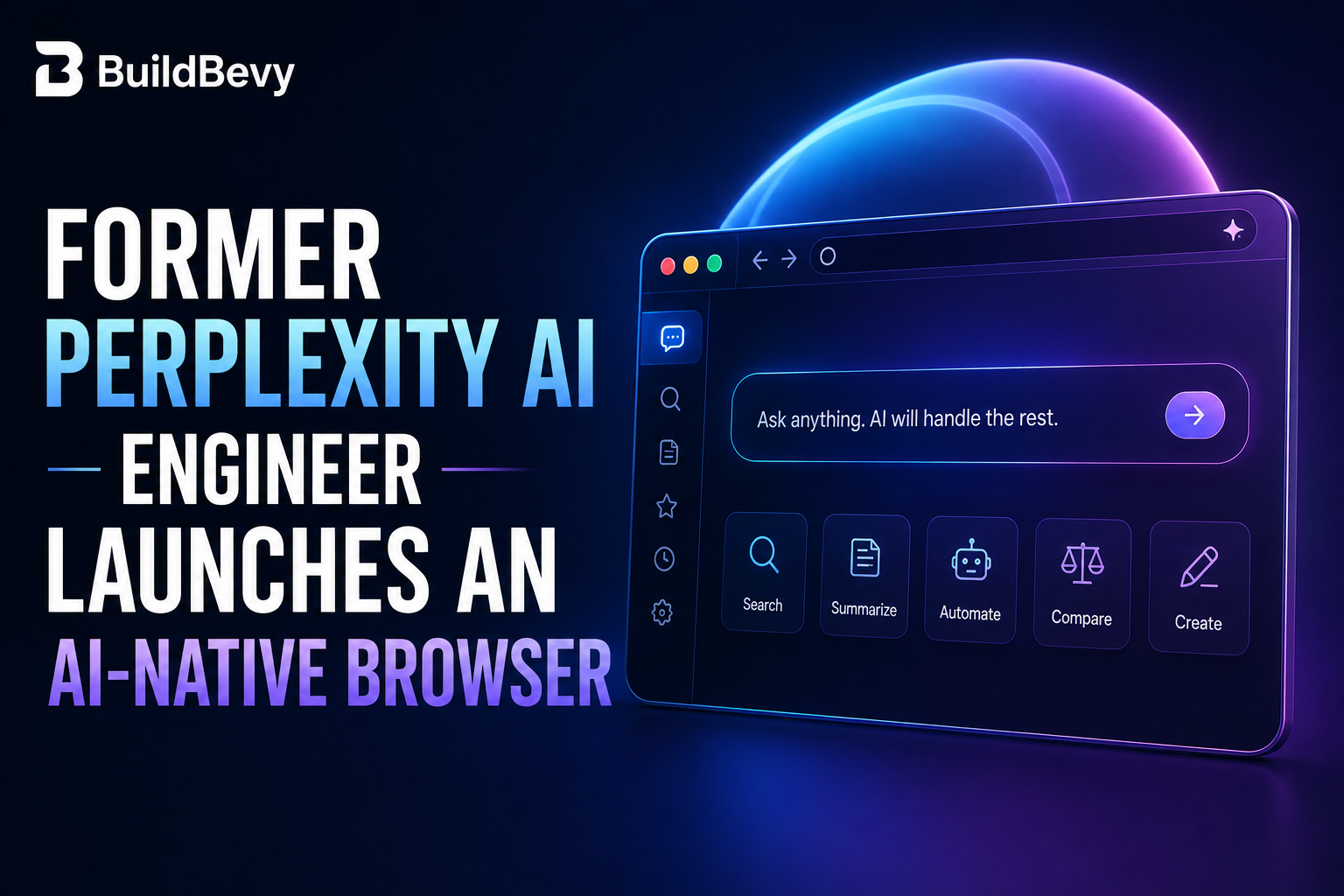

A former Perplexity AI engineer has launched a new startup focused on building an AI-native web browser, signaling that the race to reinvent internet browsing is accelerating. Instead of treating artificial intelligence as an optional feature, the startup aims to make AI the core operating layer of the browser, enabling users to search, understand, and complete tasks through natural language.
The announcement reflects a broader industry trend as AI-native browsers emerge as one of the fastest-growing categories in consumer software.
Rethinking the Modern Web Browser
For decades, web browsers have primarily served as tools for opening websites and managing tabs.
The new startup believes that model is becoming outdated.
Its AI-native browser is designed to function as an intelligent assistant that understands user intent, automates repetitive work, and helps complete tasks rather than simply displaying web pages.
Instead of manually navigating dozens of websites, users can interact with the browser conversationally while AI performs much of the underlying work.
From Search to Action
Traditional browsers help users find information.
AI-native browsers aim to help users act on that information.
The browser is expected to support capabilities such as:
- Intelligent web search
- Content summarization
- Multi-page research
- Workflow automation
- Form completion
- Email drafting
- Shopping assistance
- Document analysis
Rather than switching between multiple applications, users can ask the AI to perform tasks directly inside the browser.
Experience From Perplexity
The startup’s founder previously worked at Perplexity AI, one of the companies leading the shift toward AI-powered search and browsing.
That experience provides insight into how users increasingly prefer conversational interfaces over traditional search engines.
The new venture appears to build on that idea by making AI the primary interface for the entire browsing experience.
Why AI Browsers Are Gaining Momentum
Interest in AI-native browsers has grown rapidly over the past year.
Technology companies are increasingly investing in browsers that integrate AI directly into everyday workflows.
These browsers can help users:
- Understand complex information faster
- Organize research automatically
- Navigate websites more efficiently
- Reduce repetitive online tasks
- Interact with digital services using natural language
Instead of acting as passive software, browsers are evolving into active digital assistants.
Competition Is Heating Up
The browser market has become one of the newest battlegrounds in artificial intelligence.
Several companies are exploring AI-first browsing experiences that combine search, reasoning, and task automation into a single interface.
As AI capabilities continue improving, browsers are expected to become central hubs for interacting with intelligent agents.
Enterprise Opportunity
Beyond consumer use, AI-native browsers could become valuable tools for businesses.
Potential enterprise applications include:
- Research automation
- Internal knowledge retrieval
- Sales prospecting
- Customer support
- Software development
- Workflow management
Organizations are increasingly looking for AI solutions that integrate directly into employees’ daily workflows, making the browser a natural place for intelligent automation.
Challenges Ahead
Despite growing excitement, AI browsers still face several challenges.
Developers must address:
- User privacy
- Security
- Prompt injection attacks
- Data protection
- Performance
- Trust and transparency
As browsers gain the ability to perform actions on behalf of users, ensuring secure permissions and strong safeguards will become increasingly important.
Why This Matters
The emergence of another AI-native browser startup demonstrates that the browser is evolving from a window into the web into an intelligent operating environment.
Instead of simply helping users access information, future browsers may understand context, anticipate needs, and complete complex digital tasks with minimal human input.
For startups, this represents one of the most promising opportunities in AI software.
For users, it could fundamentally change how they interact with the internet.
The Bigger Picture
Artificial intelligence is reshaping every layer of computing—from search engines and productivity software to operating systems and web browsers.
As competition intensifies, AI-native browsers are becoming more than just alternatives to Chrome or Safari. They are evolving into platforms where intelligent agents can search, reason, automate, and collaborate on behalf of users.
The launch of this new startup by a former Perplexity AI engineer reinforces a growing industry belief: the future of browsing is no longer about tabs and links—it’s about AI-powered experiences that help users get work done.

 By
By